A mixed basket is a transaction where a shopper buys both online items that are offered on an ecommerce site, and in-store items that are available at a brick-and-mortar store. The sale attribution and reconciliation of mixed baskets depends heavily on the structure of your Adyen account.
This page describes various options for an account structure that accommodates mixed baskets. Before you decide on a specific structure, we recommend you discuss these options with your Adyen implementation engineer or account manager.
Requirements
Before you begin, check if the information on this page applies to you.
| Requirement | Description |
|---|---|
| Integration type | The information on this page is relevant for Adyen integrations with both an online payments channel and an in-person payments channel. |
| Setup steps | Make sure you are familiar with account structure basics. See: |
One merchant account without stores
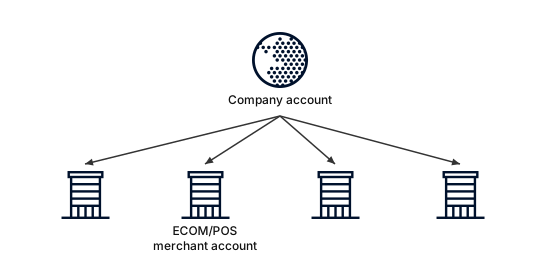
In this structure, you use a single merchant account for both ecommerce and point-of-sale transactions.
For a mixed basket, you authorize the full amount for all items, regardless of whether the items are online or in-store. If items are delivered or picked up at different moments in time, you make separate partial capture requests.
Considerations:
- Very simple to set up.
- Managing configurations, terminals, and user credentials is more complex compared to a structure with stores.
- No separation in reconciliation between ecommerce and point-of-sale transactions.
Separate merchant accounts
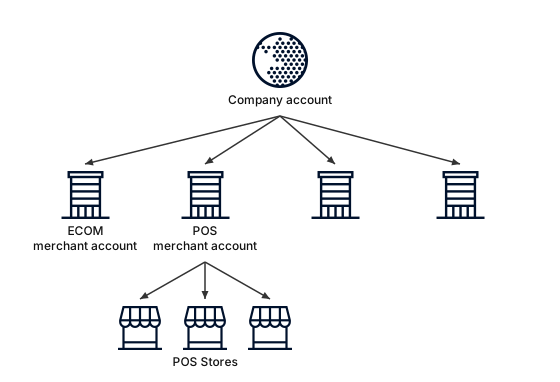
In this structure, you use two separate merchant accounts, one for ecommerce and one for point of sale.
A mixed basket requires two payment requests.
- The payment for the online items is processed through the ecommerce merchant account, using payment methods that are set up for the ecommerce merchant account.
- The payment for the in-store items is processed through the POS merchant account, using payment methods that are set up for the POS merchant account or a store under the POS merchant account.
Considerations:
- Simple to set up and to scale.
- Separate reconciliation for each merchant account.
One merchant account with POS stores
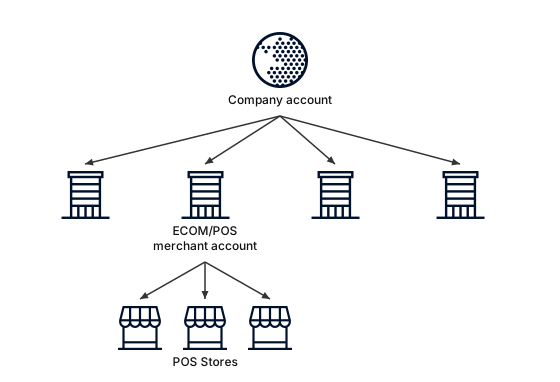
In this structure, you use a single merchant account for both ecommerce and point of sale, with point-of-sale stores configured under the combined merchant account.
A mixed basket requires two payment requests.
- Both payments are processed through the combined ecommerce/POS merchant account.
- The online items are paid using payment methods that are set up for the merchant account.
- The in-store items are paid using payment methods that are set up for the POS store under the merchant account.
Considerations:
- Payment methods must be set up with priorities.
- Both sales channels are distinguishable within the same reconciliation file.
One merchant account with ecommerce and POS stores
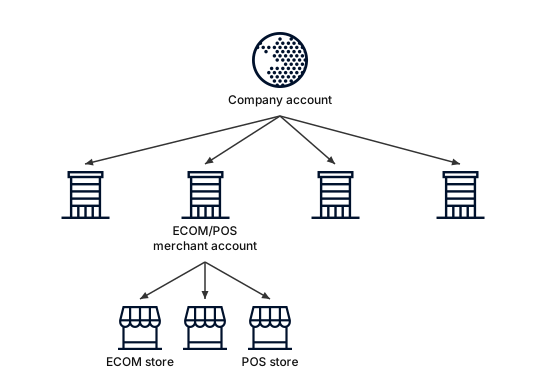
In this structure, you use a single merchant account for both ecommerce and point of sale, with separate ecommerce stores and POS stores configured under the combined merchant account.
A mixed basket requires two payment requests.
- Both payments are processed through the combined ecommerce/POS merchant account.
- The online items are paid using payment methods that are set up for the ecommerce store.
- The in-store items are paid using payment methods that are set up for the POS store.
Considerations:
- Payment method setup is simple.
- Reconciliation happens within the same merchant account.