If you use an embedded issuing integration, you are a platform or marketplace that uses Adyen's infrastructure to provide financial tools, such as business cards, to other independent businesses (your users). Your users issue these cards to their employees or business departments, to cover business-related expenses.
Your users are responsible for funding the cards, either through payments or top-ups. Depending on how they fund their cards, you can have two types of embedded issuing integrations:
- Embedded issuing with acquiring (Adyen for Platforms) : You acquire payments through Adyen on behalf of your users, which they use to fund their Adyen-issued cards.
- Embedded issuing standalone: You do not process payments on behalf of your users through Adyen. Instead, your users fund their Adyen-issued cards by topping up from their verified transfer instrument.
Embedded issuing with acquiring (Adyen for Platforms)
When using this model, you users fund their Adyen-issued cards by acquiring payments through Adyen.
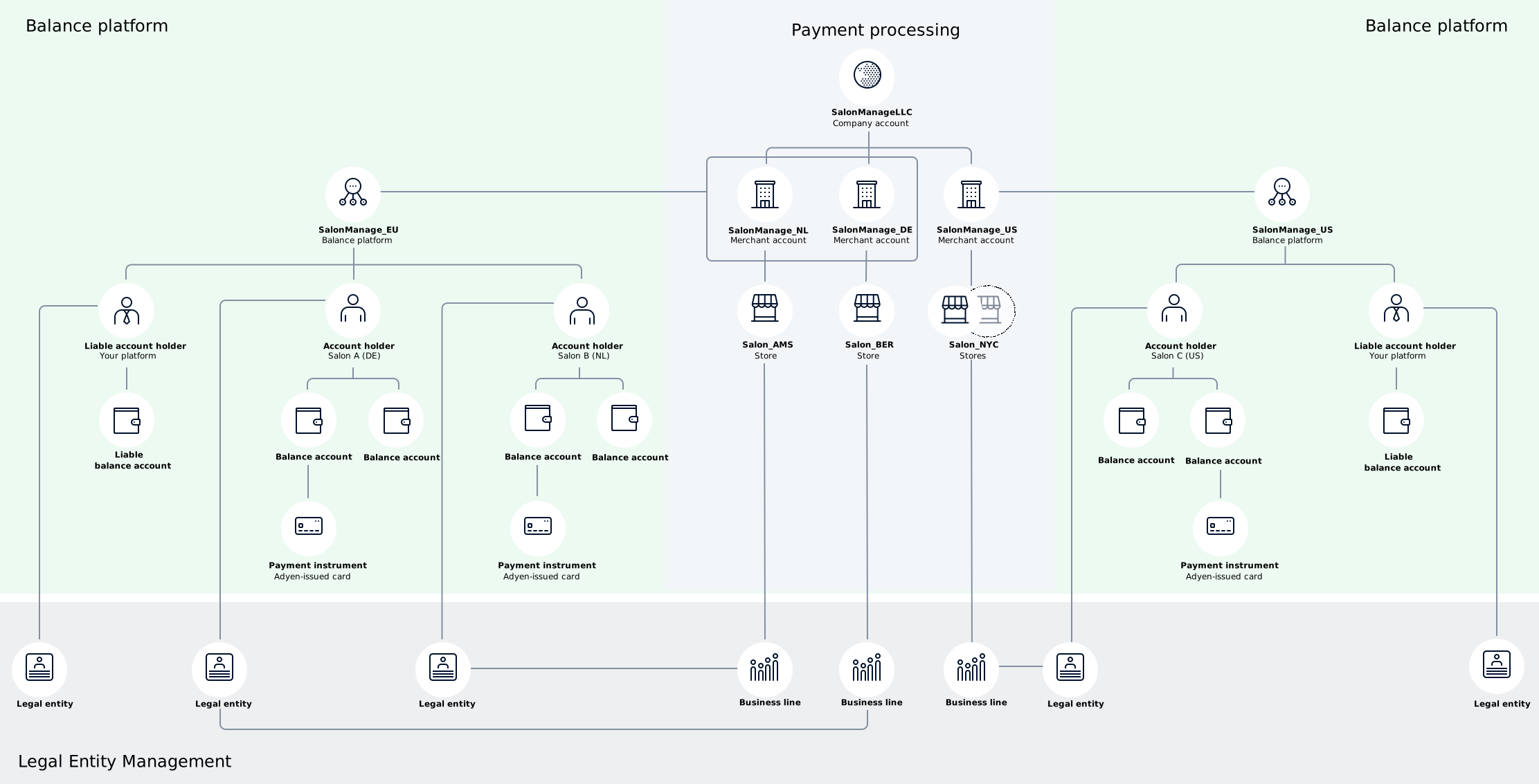
In the following example, you are a global salon management platform called SalonManageLLC. You offer reservation and payment services to salons in the US and the EU. You use Adyen to allow your users (salons) acquire payments from their customers. You also want to allow your users (salons) to issue business cards to their employees to make business-related expenses such as to buy supplies and tools. They can fund these cards using the payments processed by the salon.
Account structure
To comply with payment scheme regulations, you must have a balance platform and merchant account in each region that you are registered and wish to acquire payments.
Based on this use case, you can classify resources depending on whether they belong to your business or to your cardholder(s).
Resources belonging to your business
-
A company account (SalonManageLLC) that represents your business entity.
-
Three merchant accounts, organized by country/region, to manage payment methods available in their area:
- SalonManage_NL
- SalonManage_DE
- SalonManage_US
The processed transactions from your users' customers are settled in these merchant accounts.
-
Two balance platforms, one for each region in which you acquire payments (EU and US):
- SalonManage_EU
- SalonManage_US
-
A liable account holder for your business.
-
A liable balance account to hold the funds of your business in your balance platform.
-
A legal entity in each acquiring region that contains information about your business. This information is needed for required verification checks.
Resources belonging to each cardholder
-
One or more stores tied to the respective merchant accounts (based on country of operation), representing the salon locations that belong to your cardholders:
- Salon_AMS
- Salon_BER
- Salon_NYC
-
At least one account holder for each country your cardholder operates in, defining their capabilities for using Adyen-issued cards.
-
For each account holder, at least one balance account per currency, to hold the funds available for their Adyen-issued cards.
-
For each account holder, one or more balance accounts to link to your user's Adyen-issued cards (payment instruments). If your user has multiple Adyen-issued cards, you can link them all to the same balance account. However, that balance account must be separate from the balance account that holds your user's funds.
-
For each balance account, a transfer instrument (verified bank account). The transfer instrument can be used to pay out the funds from the balance account, or to top up the balance account.
-
A legal entity in each country your cardholder operates in, containing information about their business. This information is needed for required Know Your Customer (KYC) verification checks.
-
A business line in each country your cardholder operates in, containing information about their industry. In this case, it is food and delivery services.
-
A payment instrument (Adyen-issued card) connected to your cardholder's balance account. When your cardholder uses an Adyen-issued card to pay for food orders, the payment funds are deducted from their balance account.
Diagram
Embedded issuing standalone
When using this model, your users fund their Adyen-issued cards by topping up their accounts using their verified transfer instrument (bank account).
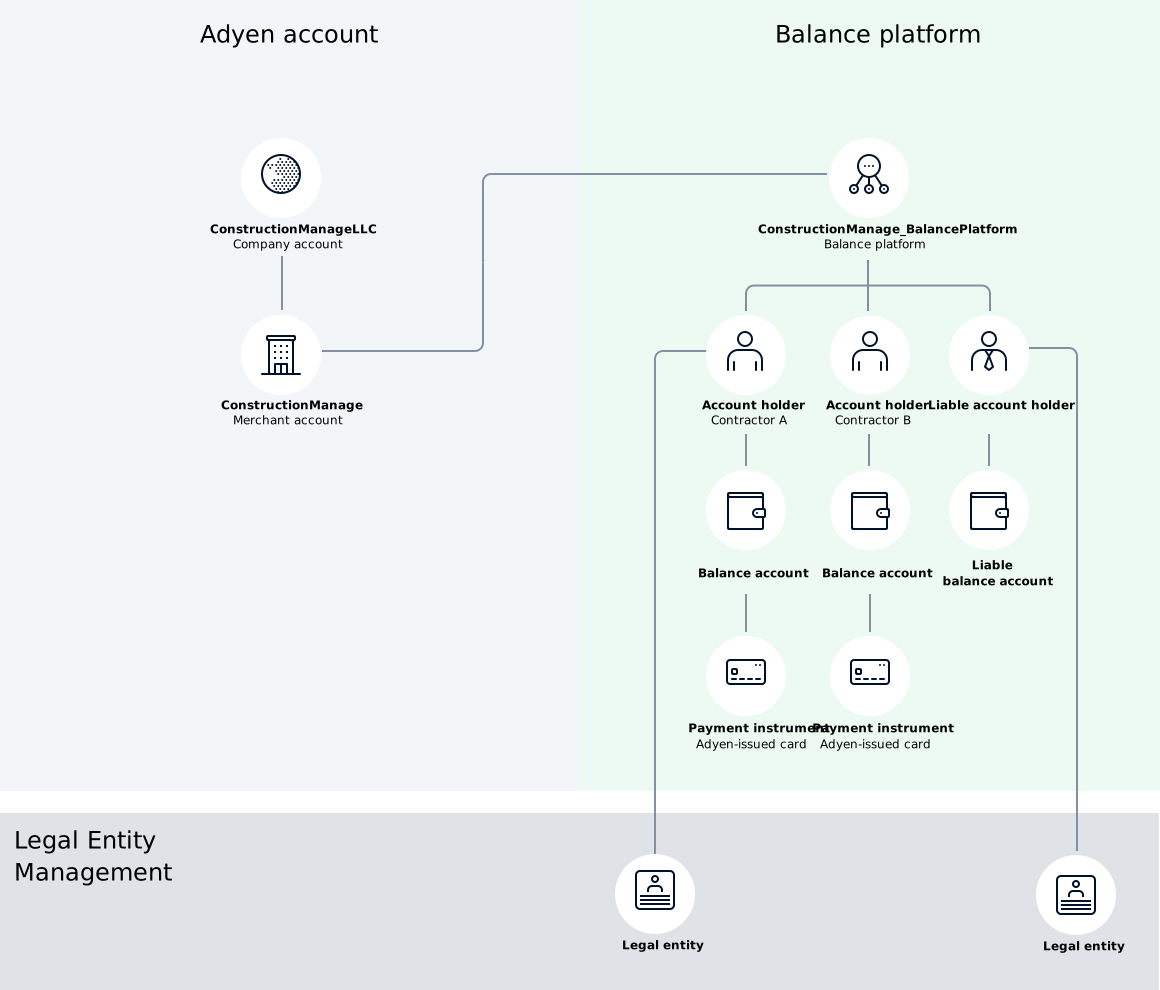
In the following example, you are a construction management platform called ConstructionManageLLC. You offer financial tools to individual contractors (users). You do not acquire payments on behalf of your contractors. However, you want to allow them to issue cards to their onsite foreman to make business-related expenses, such as to buy lumber and tools.
Account structure
Based on this use case, you can classify resources depending on whether they belong to your business or to your cardholder(s).
Resources belonging to your business
-
A company account (ConstructionManageLLC) that represents your business entity.
-
A merchant account (ConstructionManage) to which to link your resources.
-
A balance platform (ConstructionManage_BalancePlatform) linked to your merchant account.
-
A liable account holder for your business.
-
A liable balance account to hold the funds of your business in your balance platform.
-
A legal entity that contains information about your business. This information is needed for required verification checks.
Resources belonging to each cardholder
-
An account holder for each of your users, defining their capabilities for using Adyen-issued cards.
-
For each account holder, at least one balance account per currency, to hold the funds available for their Adyen-issued cards.
-
For each account holder, one or more balance accounts to link to your user's Adyen-issued cards (payment instruments). If your user has multiple Adyen-issued cards, you can link them all to the same balance account. However, that balance account must be separate from the balance account that holds your user's funds.
-
For each balance account, a transfer instrument (verified bank account). The transfer instrument can be used to top up the balance account.
-
A legal entity in each country your cardholder operates in, containing information about their business. This information is needed for required Know Your Customer (KYC) verification checks.
-
A payment instrument (Adyen-issued card) connected to your cardholder's balance account. When your cardholder uses an Adyen-issued card to pay for business expenses, the payment funds are deducted from their balance account.
Diagram