If you use an enterprise issuing integration, you are an organization that issues business cards to your own employees or business departments to:
- Cover business-related expenses
- Pay business suppliers
You are the primary entity responsible for funding these Adyen-issued cards, either through payments or top-ups. Depending on how you fund your cards, you can have two types of enterprise issuing integrations:
- Enterprise issuing with acquiring: Your organization acquires payments through Adyen, which you use to fund your Adyen-issued cards.
- Enterprise issuing standalone: Your organization does not process payments through Adyen. Instead, you fund your Adyen-issued cards by topping up from your verified transfer instrument.
Enterprise issuing with acquiring
When using this model, you fund your Adyen-issued cards by acquiring payments through Adyen.
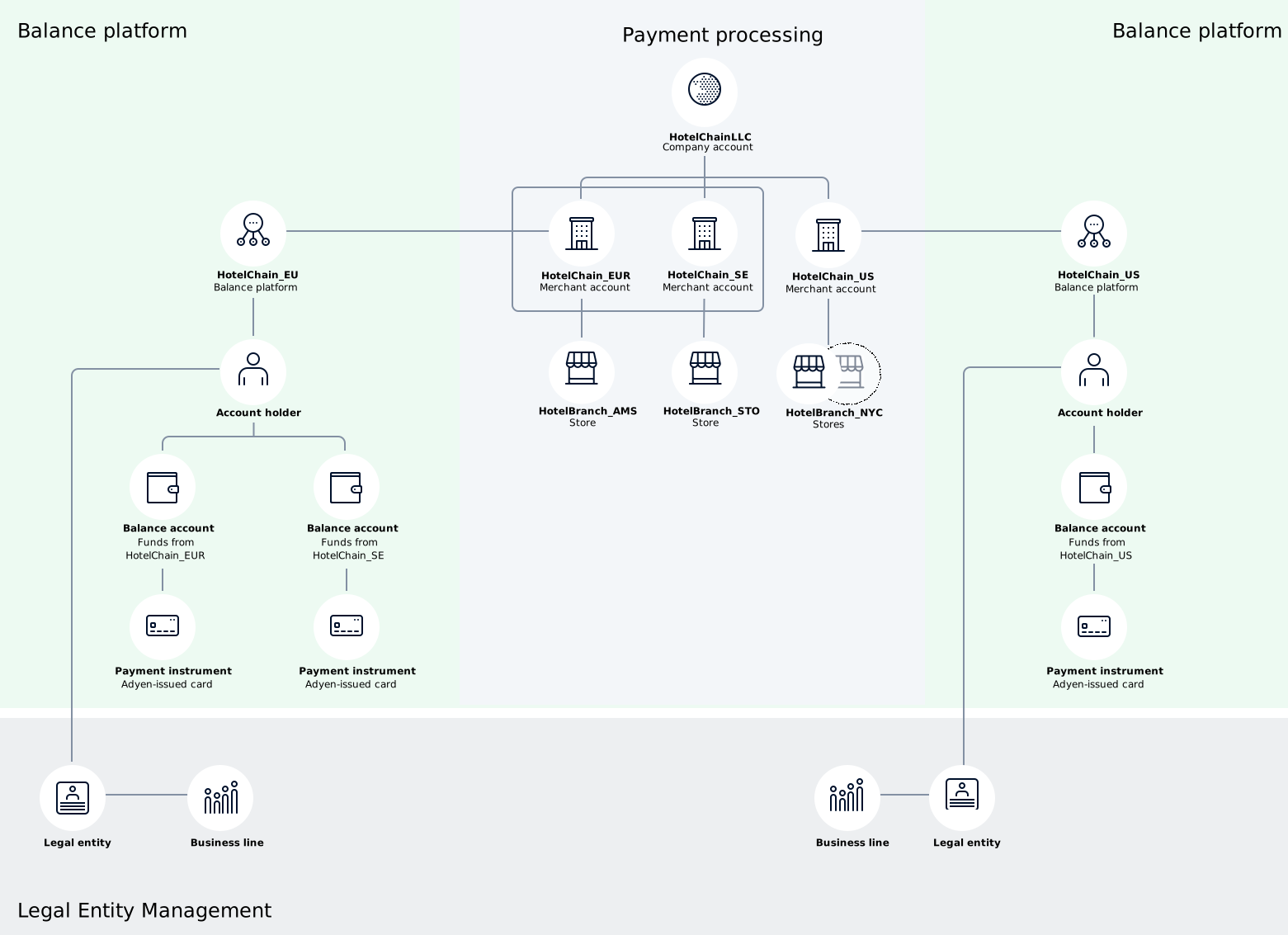
In the following example, you are a global hotel chain called HotelChainLLC with branches in different regions around the world. You want to use Adyen to acquire payments from your hotel guests. You want to issue business cards to the hotel managers in each of your branches, so that they can pay for business expenses such as catering, repairs, and housekeeping supplies using the branch's processed revenue.
Account structure
To comply with payment scheme regulations, you must have a balance platform and merchant account in each region that you are registered and wish to acquire payments.
Based on the above use case, here is one of the simplest account structures you can have:
-
A company account (HotelChainLLC) that represents your business entity.
-
Three merchant accounts, in this case organized by currency:
- HotelBranch_EUR (EUR)
- HotelBranch_SEK (SEK)
- HotelBranch_USD (USA)
The processed transactions from your hotel guests are settled in these merchant accounts.
-
A store tied to each merchant account, representing each branch of your hotel. With these stores, you can manage the payment methods available in each branch location/country.
Stores are only required if your business processes in-person payments.
- HotelBranch_AMS (Amsterdam)
- HotelBranch_STO (Stockholm)
- HotelBranch_NYC (New York)
-
A business line in each acquiring region, containing information about your industry. In this case, it is hospitality and reservation services. This is required for the Know Your Customer (KYC) checks that must be passed before you can issue cards.
-
Two balance platforms, one for each region in which you acquire payments (EU and US):
- HotelChain_EU
- HotelChain_US
For each of these balance platforms, you have:
- An account holder to define your cardholders' capabilities.
- A balance account for each merchant account under your company. In this example, your company has three merchant accounts. This means that you have three balance accounts: two under HotelChain_EU and one under HotelChain_US.
Every merchant account settles their funds into a single balance account. The funds processed through a merchant account cannot be split between multiple balance accounts. However, multiple merchant accounts can settle their funds to a single balance account.
- At least one Adyen-issued card per balance account, to cover the branch's business-related expenses.
- For each balance account, a transfer instrument (verified bank account). The transfer instrument can be used to pay out the funds from the balance account, or to top up the balance account.
- A legal entity containing information about your business. This information is needed for required verification checks.
Enterprise issuing standalone
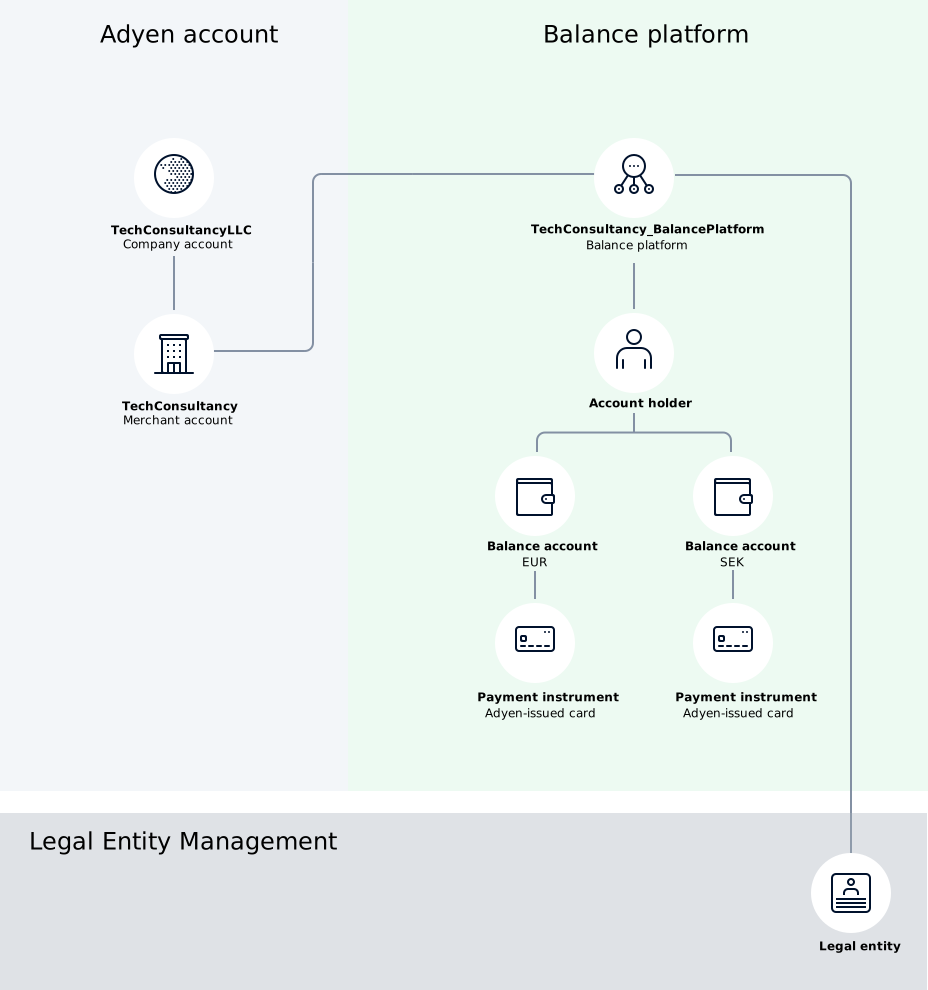
When using this model, you fund your Adyen-issued cards by topping up your accounts using your verified transfer instrument (bank account).
In the following example, you are a tech consultancy called TechConsultancyLLC. You want to use Adyen's infrastructure to issue cards to the consultants working for your company. These consultants can use the cards to cover business expenses related to travel, flights, and client dinners. You do not acquire payments through Adyen, and instead fund the cards by topping up your Adyen accounts from your company's bank account (verified transfer instrument).
Account structure
Based on the above use case, here is one of the simplest account structures you can have:
-
A company account (TechConsultancyLLC) that represents your business entity.
-
A merchant accounts (TechConsultancy) to which to link your resources.
-
A balance platform (TechConsultancy_BalancePlatform) tied to your merchant account.
Under the balance platform, you have:
- An account holder to define your cardholders' capabilities.
- A balance account for each currency in which you expect to make business-related payments.
- For each balance account, at least one Adyen-issued card that you can issue to your consultants.
- For each balance account, a transfer instrument (verified bank account). The transfer instrument can be used to top up the balance account.
- A legal entity containing information about your business. This information is needed for required verification checks.